
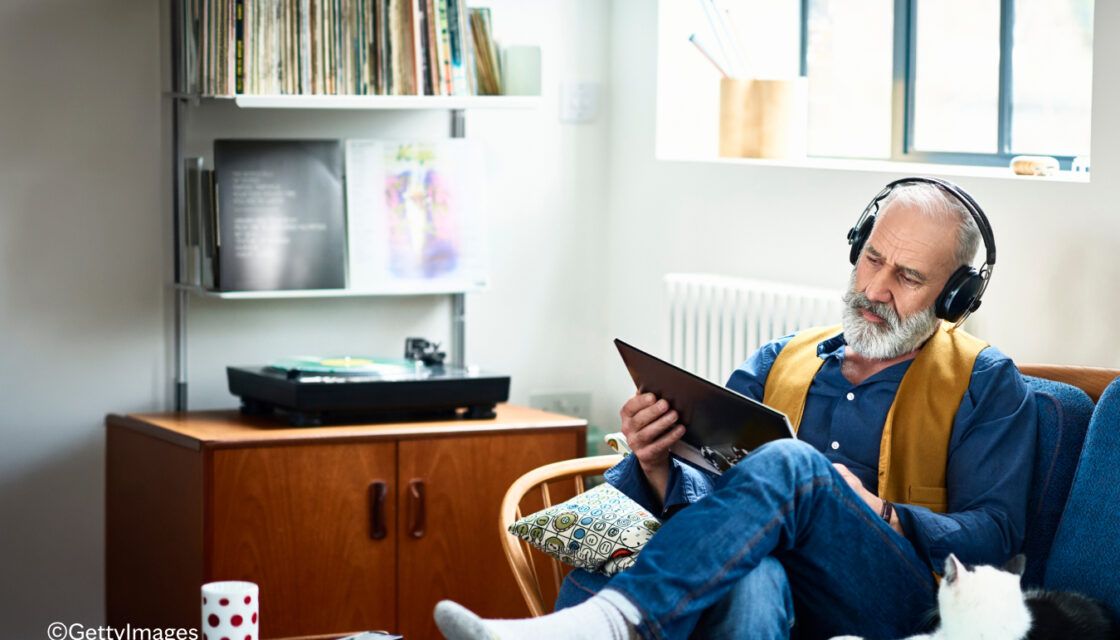
As more Americans age, they have to contend with the question: Where will they choose to age? Staying at home can be risky – but it can be a source of comfort while also reducing hospitalizations and delaying nursing home care.
On this episode of Aging Forward, Dr. Sarah Nosal discusses the benefit of staying in a familiar environment to one’s functionality, as well as their emotional, physical, and cognitive health.
Christina Chen, M.D.: We are now living longer than ever before. And with that gift of longevity comes a very important question: “Where and how do we want to age?” And for most older adults, the answer is very clear. They want to stay in homes that they are familiar with, and they want to do that with their families.
This is “Aging Forward,” a podcast from Mayo Clinic about the science behind healthy aging and longevity. Each episode, we explore new ways to take care of our long-term health, the health of our loved ones, and our community, so we can all live longer and better.
I’m Dr. Christina Chen, a geriatrician and internist at Mayo Clinic in Rochester, Minnesota. And in this episode, we’re talking about aging in place — and the challenges that come with it — because it requires thoughtful planning and preventive healthcare. With the right mix of support, we can hopefully reduce hospitalizations, delay nursing home care, and improve outcomes. But when done poorly, it can be very risky for older adults.
Today, we are joined by Dr. Sarah Nosal, a family medicine physician with a practice in the South Bronx area, New York, and she’s also the president of the American Academy of Family Physicians. Welcome, Dr. Nosal. I’m so honored to have you here on the podcast.
Sarah C. Nosal, M.D., AAFP: Thanks so much. Glad to be here.
Christina Chen, M.D.: A lot of people, when they hear about this term, aging in place, they have a general idea of what it means, but it’s so broad. What does it mean, and how has it become such an important topic in healthcare today?
Sarah C. Nosal, M.D., AAFP: I think about it a couple of different ways. I think many of my patients who are thinking about aging in place think literally the place they physically are, the home that maybe they’ve been in, the apartment that they’ve been in for all or most of their adult life, and say, “I want to be here forever. I want to be here until I drop dead in my house, and I want to enjoy every moment here.”
I would also say that aging in place also turns you to sometimes being present with your family and perhaps living with or moving in with, or having family move in with you — but being in another place that might be identified as home, but isn’t a managed long-term living care facility, or other type of living facility.
And that’s the definition most of my patients are bringing to me or talking to me about when they say they want to stay at home and don’t want to be somewhere else.
Christina Chen, M.D.: Yeah. It sounds like having some sort of familiarity or stability — whether it’s in your home or whether you go somewhere else, but just having that constant in place, somehow with that support around you.
And I guess beyond convenience — why is aging in place so desirable for older adults who want to stay in their home? What benefits do you see for their physical health, their emotional wellbeing, and their quality of life?
Sarah C. Nosal, M.D., AAFP: There are multiple benefits to staying in an environment that you’re familiar with. We know that an older adult who stays within their home is more likely to maintain their functional status.
They’re more likely to still be able to go to the store, be able to cook their meals, be able to care for basic hygiene stuff for themselves, be doing their laundry, getting dressed, eating, all of that stuff that we maybe take for granted, — but that we actually [do not recognize] how quickly those skills will decline as we age, we do see that they tend to be better for adults who are aging in place, who are in that known environment.
We also know more specifically for adults, particularly those who are experiencing dementia or early signs of some confusion or some difficulty along that spectrum, that changes in environment can be really challenging.
That, an environment that’s super well known, that even as we’ve become perhaps more confused in the evening, we may be able to navigate more adequately during the day. And as we become more confused with time, a large change in environment that you are not familiar with at all may actually be associated with a rapid decline in function in those individuals.
Christina Chen, M.D.: What would you say makes someone a good candidate for aging in place?
Sarah C. Nosal, M.D., AAFP: When I’m talking to my patients and to families who are saying, “Mom only wants to stay in her home — that’s what’s going to happen.” I really talk about, what kind of medical problems does your mom have? Mom is there. We’re having a family conversation.
If mom has had really difficult-to-control diabetes, has required help for walking, difficulty ambulating, has had heart attacks, and is on multiple medications and blood thinners that make her at risk if she falls, and maybe some medicine that increases her risk of falling at night — as you compound those risks, those chronic conditions, those are people we want to really think about, what will that plan look like?
Whereas, if you are an older adult, like my own mother, which, I’m very lucky, is in really great health, she has no chronic condition, she’s really physically able, she’s able to still drive, the likelihood that she, for at least quite a bit of time will be able to stay in place — which is her goal, and I know something that we as a family have talked about — makes her a good candidate for that.
But it’s a challenge to identify when you are someone who has chronic conditions, and to realize, “What will it look like as I’m aging, if I might not be as safe to be in place as I imagined I would?”
Christina Chen, M.D.: And we’re talking about safety because that is the biggest risk of someone, for example, having a fall, ending up with a hip fracture, and going to the hospital. And then there are other challenges for older adults in their homes, too, when they’re trying to stay at home. What are some of those other challenges that you often see?
Sarah C. Nosal, M.D., AAFP: The most common challenges, I will tell you, as I’m exploring this with my own family members and with a lot of my patients: My mom moved from a multi-floor home that had a basement with some very steep stairs. No bars in the showers. No seats. No bars next to the toilet, a backyard that required maintenance. Uneven steps out to her car.
My mother has actually now moved to an apartment that she loves and considers her place where she’d like to age in place, that is one floor. As they were moving in, they put those bars next to the toilet.
They made sure that the places where we know there could be trip hazards, how do we remove an elevated barrier between rooms? There are no stairs so that her and her partner are not going to be navigating what we already knew was the riskiest place for a fall.
And that also, a house that should someone needs to be in a wheelchair or be using a walker at some point — are the hallways wide enough? Are the doors wide enough? And took all of those things into consideration, that were really challenges in her other living environment.
I would say the other thing that comes up a lot as I’m talking to my patients now, as they’re aging even very happily, is that they’re feeling more and more lonely. Even if they’re in the community they grew up in, they say, “The calls I get now are that another friend has passed away.” And that intergenerational and community connection — not having it can be one of those really significant challenges. But having that [intergenerational and community connection] can be a real advantage as you’re aging in place.
Having community ties, participating in community activities, whether that’s volunteer work or going to the library or a seniors exercise class, those relationships you build, particularly cross-generational, can really be the difference between successful aging in place or not having the kind of support system that you need to be able to do that.
Christina Chen, M.D.: In terms of how someone can safely stay at home, there are so many things to consider: the atmosphere, environment, social connection, and physical abilities. And I know from experience that it can be very difficult to have that conversation with patients, especially when they have a hard time admitting that they might be struggling.
Sarah C. Nosal, M.D., AAFP: As I’m seeing families cross-generationally, it’s often easier to have a conversation with grandma when the daughter and the granddaughter are there and say, “What have we all been thinking? I know you’re making sure grandma’s taking her medications. You’ve been helping her by going to the pharmacy, but she’s still on her own in her apartment. What do we think the next plan is there? Grandma, w5hat do you want? What are you thinking you’re looking for?”
And often they’ve had some talk about it as a family, and often they’ve avoided it completely. I would say both of those are equally, equally frequent. But that is such a welcome place to open that conversation. I often take some notes in my chart about what different members of the family have said, particularly the key patient. So if grandma says, “I am never leaving my house,” and “I want this,” or “I don’t want that.”
Even if they haven’t signed forms or said anything in particular, I’m going to put that in my notes so that I can revisit that again and say, “This is what you told me last time, and now you were just in the hospital. Maybe something new has come up. Let’s talk about what that means and how you’re getting along right now?”
There’s a very frequent opportunity to make it not a crisis, but just part of engaging our patients and talking about what their plans are for their health and wellness down the line, as well as what that care looks like in their home or outside of it.
Christina Chen, M.D.: And that leads me to my next question: Do you have any other strategies on how to preserve one’s dignity while still prioritizing that safety? And making sure that they have all their needs met at home?
I mean, even something as benign as using a walker. I have to fight so hard to remind someone, “This is helping you!”
Sarah C. Nosal, M.D., AAFP: No question. Even just the cane to get up to go to the bathroom. I said, “Where have you been falling?” “Oh, only in my house.”
“Well, you have your walker right here now.”
“Well, I don’t use my walker in my house.” And I said, “Why aren’t we?”
And sometimes you find out it’s because they have all their rugs all over the floor, and they can’t, or their dog is in the way. There is a ton of technical supports that can help us as we’re supporting our family members and our patients who are aging in place.
My own mother-in-law, who lived quite far away — we were in New York City, and she was in Maine — we had gotten her 24-hour home care, because her wish was to be as long as possible on her own in her house in Maine, but needed a lot of assistance. And we had cameras and devices that dinged if a door opened, and we were able to interface with her medical record. And she had emergency alert systems and made sure that there was access to a smartphone wherever she physically was going to be. And those are things that can extend the time.
There are also a lot of resources that are community-based, or maybe available through your health plan that can include things like food or transportation that become more difficult as you’re aging in whatever place you are in and whatever part of the community you’re in.
Christina Chen, M.D.: We have a lot of caregivers who are listeners to this podcast and want to be able to offer them advice and resources as well. And for family members who are caring for their loved ones, aging loved ones, what are early signs that they may be on that trajectory of needing extra support in order to safely age at home?
Sarah C. Nosal, M.D., AAFP: One of the first things that I encourage all family members to do is join your family member for their family doctor visit. You see your family member across this entire lifespan, with a different lens than the physician or clinician who’s engaging them and seeing them in the office, particularly after any event.
So, let’s say we needed to have surgery for an arm that had bad arthritis. And just the slight change in their ability to use that arm, all of a sudden, they have a weakness. Their balance is off; you’re going to notice that other functions maybe aren’t the same as they used to be.
If someone had a heart attack or a stroke and spent any amount of time in the hospital, as we get older, we really quickly lose some of our function when we’re hospitalized, partially just not getting up and out of bed and our ability to do just normal strength-based tasks can be lost, even if cognitively we’re perfectly intact.
And so those are opportunities to really make sure we’re checking in both with our loved one, one-on-one, and then checking in with the clinician who knows them over time to see, “Hey, is there something that I should be thinking about as their daughter, as their granddaughter, that might be different than what we needed a month or three months ago?”
I often talk about, at the holidays, families come to visit and are surprised that all of a sudden the house looks disordered. And mom has always been really organized. Or couldn’t remember the recipe for the cookies we normally make at this time of year. Or, told me a story several more times than normal, over and over again.
These small changes are also important for you to join your family member or loved one at their family doc appointment, and share that they’ve happened.
And they may be normal. They maybe a different medical problem. It could be a thyroid problem or a vitamin deficiency that could be treated and is totally reversible. Or they could be early signs of memory and cognitive issues.
Christina Chen, M.D.: It sounds like really any deviation from the norm, whether it be a routine or something they enjoyed doing before, but they don’t do anymore for whatever reason, or more, social withdrawal, just something that doesn’t seem right, like this is not the mom that I’m used to.
Do you have any advice for how we handle these things when people often live apart, and people are far away? How do we get involved when everyone’s so spread apart?
Sarah C. Nosal, M.D., AAFP: There’s always a role for you to be involved with your loved one’s care.
I, as a family doc, will often call one of the kids of my patient, and they’ll say, “Oh, can you please call him? He wanted us to get him on the phone while we were on the visit.”
I may have gone over the whole plan with a patient and even maybe their home attendant. And then I’m calling son number two, who’s the most involved but may not even live in town to go through how things are going, what medication changes we made. And that’s a really reasonable request. It’s a great request to make ahead of time so that I know when I’m walking into a room that I’m going to be making time for this.
Depending on the organization you work for and the kinds of resources that are available at your loved one’s doctor’s office, they may be able to even include you on a telehealth visit where you could all be on camera and talk to each other.
But sometimes I also have said to family members, “I really need you to come into town. I need you to go check out mom’s house. I need you to see what’s going on and help us make a decision together of what should happen.”
Christina Chen, M.D.: Let’s talk about just planning ahead, because ideally, starting early, staying flexible is the best approach as care needs change. When it comes to aging in place, how and when should we even begin planning? How early is too early?
Sarah C. Nosal, M.D., AAFP: I don’t think it’s ever too early, and I do like to think about it within the family structure. We usually think about it, definitely in your 50s and 60s, particularly if you’ve been finding out that you have some chronic medical problems that might impact your wellness down the line.
Or you’ve seen the other generation in your family who developed certain medical problems, which might give you a hint of what’s in the future for you. Are really good times to think about, are there opportunities for health savings, for long-term care?
There are ways that I, as a family doctor, cannot financially guide you, but certainly, if financial experts can guide you on how to think about how you want to structure for the future.
And many of us think our lives will end very quickly and then there will be no additional need, and we’ll have been fully functional and then not here.
In fact, we’re very lucky that people are living longer and as we live longer, inevitably we will not be quite as capable as we were both physically and sometimes mentally. And we need to plan, while we have full capacity, what that’s going to look like.
Christina Chen, M.D.: In general, what would you say are the core components of a strong aging in place plan? What does preventive care look like? And how do we manage chronic conditions in their home?
Sarah C. Nosal, M.D., AAFP: One of the core things is making sure you’re engaged with a family physician, another clinician who is aware of all of your health needs. You’ve been evaluated, and you’re up to date on that care.
That’s the first hub. During that care, you’ll have identified, do you have mobility needs? Are there some cognitive needs that you have? Are there things that have been impacted over time?
And then, of the care that’s happening, the things that we don’t always think about that we do in our everyday life, from our personal care, household chores, cooking, planning meals, even managing our money, which is sometimes the first thing that becomes a little more complicated if we start to struggle.
How are we going to access healthcare? How close is it to where I live? Is that accessible? What does transportation look like? Are there assistance for transportation?
And then really, if everything goes great, that’s all great. But what’s the safety pla if something doesn’t go great? What if something happens? What if I just have a fall, one of the most common things that happens as we get older and our balance and our muscle strength becomes more compromised?
What’s the safety plan there? What would happen in that situation? Either temporarily or long-term. But a good plan will have all of those components thought about.
Christina Chen, M.D.: I feel like that’s something that advance care planning doesn’t often talk about. I mean, we talk about resuscitation status and our goals and wishes, but just everything in between the preventive care safety plan, and what we want to do in these crisis situations. Sometimes those nuances can be missed.
Do you do home safety assessments? Sometimes we can do home visits, we can have OT get involved, as well as making sure that the home is safe, or fall prevention needs. What role do home safety assessments play in all this?
Sarah C. Nosal, M.D., AAFP: We speak to our older adults regularly and ask them about falls and about safety in their home. In the office setting, we start there. We’re asking them if they have heaters. This is the time of year when we really worry about fires, so exposed heaters. Do they have central heating? Do they have a phone in their room?
We ask all of those basic questions. But we also work with nursing teams that are able to go into the field and do home assessments for our older adults. And sometimes that’s done with a physician, actually, on camera with them.
I have found dressers full of hundreds of old pill bottles, where I was concerned, maybe a patient was confused about what they were taking, and in fact found they had hundreds of pill bottles and swooped those into a bag, and we came into the office and sorted through them to make sure we started from a really good, fresh place.
Also, the assessment of the physical safety: if my patient has a walker or a cane, where are they keeping that, and is that accessible to them when they’re sitting on the couch?
Is their couch really low, and they would benefit from a chair that was risen up or could actually help raise them up? Are there small rugs or lots of cluttered furniture or even sometimes people who are keeping a lot more materials in their home that might make a fire risk or make it a fall risk for them?
And that is when we are in the home, it opens that opportunity for identification and discussion that was not there when you were just asking those questions in the office. And that was a huge advantage, also, when we were doing more telehealth, I would say, that patients would walk me through their home, and I would say, “I am concerned about, I just saw how you got up from that chair, and I saw how far away that cane was, and let’s talk about that.”
I think that the in-home assessment by nursing is invaluable, and if you are able to work with a clinician or through your health plan to get that kind of assessment, I strongly encourage patients and caregivers to make sure that’s happening.
Christina Chen, M.D.: And as you mentioned earlier, as needs evolve in terms of as function declines and cognition declines, people may start to require more help with everyday tasks. How can we plan ahead for things such as housekeeping and transportation needs, financial planning, and meals?
There are so many things that we need to survive to have a healthy body and thrive. But it’s hard to plan ahead for these things when you’re not having those issues.
Sarah C. Nosal, M.D., AAFP: I would love all families to have these conversations. That’s a really big deal. I do think that most of my patients who are the most successful are living in a community where they have either very strong social ties to both community organizations and friends, but particularly to family who are invested in their care and wellbeing.
As family doctors, we do something called an annual wellness visit. Lots of docs out there and lots of caregivers and patients who are listening probably have had this visit where someone asks them, “Who does your shopping? Who helps you get dressed? Are you able to drive a car on your own or someone help get you around?”
Those are the things we should be thinking about. “Okay, I can do all of those things on my own. Now, what if I couldn’t? Who would be that person? What would be that resource?”
And it might be, “Oh, but my young friend who lives in the building, she already cooks me a meal every week, and she would be on board for me to join for their meals every day. She’s already invited me.”
Or, “I actually don’t have any systems set up for that. And if I for some reason couldn’t make it to the store, I’d be in big trouble.” It’s really tough that lots of our insurance for healthcare does not cover these types of services. Medicaid does make more of these services available, but that is often not the coverage that patients have, and often don’t have the private funds to cover them when family isn’t able to step in.
Christina Chen, M.D.: So exploring what’s in your network now, and I always get really excited when I see large families. There are ten grandkids and multiple kids saying, “Okay, you can be in charge of that granddaughter. You’re the driver. You’re going to manage the finances.” It takes a village. It takes a village now and then, maybe more people later, but at least you have that network within reach.
Sarah C. Nosal, M.D., AAFP: Families are thinking about that. And if you help give them a little bit of a framework, they’re saying, “Oh, I’d love to do that,” and “That’s the day of the week I’m free.” And they’re willing and ready and able, and our patients often feel the most dignity when they’re with their family that they love and care for and have had that relationship ongoing.
It’s not unfortunately there for everyone, but when you can support that family structure you knoe exists there, it’s a wonderful collaboration for the patient and for the rest of the family.
Christina Chen, M.D.: Say things work well for months and years, and things are going great, but then the dynamic changes, and then something happens again. Maybe multiple hospitalizations where things get worse, and they don’t often come and see the doc. So how often should this be assessed, and what would trigger a reevaluation, even if they’re not coming to the doctor?
What can the family members do to make sure that this is a sustainable plan over time?
Sarah C. Nosal, M.D., AAFP: Any change in status.
If you know your family member went to the ER, even if they didn’t go to their doctor, please bring them to their doctor after. But even if they didn’t go, or if they had a fall at home but refuse to let you call 9-1-1 and get assessed — those are times you should think about what’s happening here.
Also, those holiday visits when you’re in the house, and you’re noticing changes again, that’s a really important opportunity both for you to have a conversation with your loved one, but also to please bring them to their family doc where we can help, even if we’re just planning ahead. Even if we’re doing fine right now, but my aunt had a fall two weeks ago. We didn’t go to the hospital. She said she was fine, but this is the second fall she’s had since your last visit here. And we’re a little worried. I’m like, “I can hook you up with our nurse. I’d love her to come into the house to see what’s going on and if there are things we can help with. Also, I can hook you up with physical medicine and rehabilitation to see if we’re using that cane right.”
Christina Chen, M.D.: Is there anyone else who you feel needs to be included in that planning team? Obviously that primary care, family medicine provider is guiding the care. And then we’ve got the family members and loved ones. But anyone else that you feel needs to be included as part of that village?
Sarah C. Nosal, M.D., AAFP: I think you want to have the people whom the patient identifies as part of their care team. In our office, as I said, we’ll often have a nurse care navigator. Often, we have a separate care navigator.
Many of my patients have an identified, even if it’s not a family member, and identified friend who they bring to all of their visits, who helps them sort of process that information and make sure they’re following up at home. I want to respect who the patient wants to be a part of that team.
Also, it depends on your needs, but we’ve had nutritionists engaged. We may have a case manager, a diabetes educator. We may be collaborating with a physical therapist depending on the needs of that patient.
So, we really think of family doctors as, sort of, we’re your medical home base, but we’re pulling together those resources, whether they’re community-based programs that are helping support you in the house, whether they’re bringing you food or a place you’re going during the day, as well as a nurse who might be going out to your home or a nutritionist who’s in my office and helping you figure out, “Okay, needing to pull back on the high sugar foods, but we still need to make sure you’re getting enough protein and energy every day. And what that looks like?
Christina Chen, M.D.: Right. We mentioned finances a little bit earlier. Everything costs so much nowadays and obviously influences the options that are available.
Do you have any thoughts about how we can support these older adults who may not have access to the right funds or other common ways that people can better pay for home-based supports when financial issues are challenging?
Sarah C. Nosal, M.D., AAFP: This is a huge challenge. I’m in a really lucky state where we have the ability to bring family members on as home health aides for family members. That there’s a whole program that sort of supports that because they recognize…
Christina Chen, M.D.: Oh, that’s amazing.
Sarah C. Nosal, M.D., AAFP: It’s great, and they recognize that that’s already happening a lot of the time. But it actually makes it possible that, even though that the compensation is not tremendous, that there is this ability to formally compensate and include family members who might already be part of the care team or who might be available should there be some compensation to become part of that patient supportive care team.
There’s also another family member who is maybe caring for a baby who also would love to have grandma around as just generational wisdom that you can sort of meet at a place where everybody has different types of needs and contributions, but that doesn’t always work out.
Having someone who’s a case manager or a financial advisor, but a case manager is often someone who first helps guide patients. For instance, you may actually be eligible for Medicaid. Have we looked at what coverage you have? Is there a better choice in the type of coverage that you’ve engaged in or have accessible to you that would make sense down the line, based on what needs you have?
And I’d say that that’s where those opportunities tend to be the most, and sometimes it feels really stuck and difficult, and that patients often exhaust a tremendous amount of financial resources that they had to try to make sure they have the resources they need while they’re still in their home, before they can be eligible for some of these services.
We do know that Medicaid ends up being one of the very largest payers for both home care and long-term care, so that really means you have to have exhausted all of your other financial resources to end up on Medicaid.
Christina Chen, M.D.: Right. I wish we had a better system to support our caregivers. I mean, it’s pretty much a full-time job for a lot of people.
What are the some types of caregiving outside of just the traditional family caregiving model?
Sarah C. Nosal, M.D., AAFP: We have that family member who is getting zero compensation, who’s hanging out with grandma and doing that with no, sort of, there’s no documentation or acknowledgement of that role, or that friend who’s coming to that visit. And we think of that as that informal caregiving.
Those are often wonderful because they know you so well and have lots of heartfelt care for you, but usually don’t have medical backgrounds. You can also get higher professional caregivers for your home.
When my mother-in-law lived with us, we hired someone who was a skilled nurse from their home country, and was working as more like a home aide here in the States, and had more skill. We were able to set hours with her. We were able to sort of, very, structure what that relationship looked like.
It was incredibly expensive. I’m very lucky we could pay for that. It did take some time to find the right person. And my mother-in-law was not as excited for the hours when someone who wasn’t known to her was helping take care of some of her more intimate needs.
Beyond that, there are also a ton of community-based resources, very variable and often tucked away in your community, that you’ll find something and you’ll think, “How did I not know this existed? It mattered so much that I can get meals delivered to the home. Or actually, I can get some free home care hours, or someone will do chores around the house, or even provide transportation to visits.”
And sometimes that can be found through a case manager at your own family doctor’s office. The American Academy of Family Physicians, we do have in our website, Community Resource Finder, where we’ve organized community resources, and you can look by your zip code.
Now, those kinds of community resources are great, but they’re not paid. Those are mainly volunteer organizations. And if something happens, if they lose funding, if there’s a horrible snowstorm, they can’t necessarily be relied upon as the main service that you’re able to provide to your loved one or to your patient.
And then, finally, what we think about is a skilled nursing facility or a senior living facility. Those are really the next step. Also, memory care facilities, which are more common for individuals who have cognitive impairment. Those are really great resources for people who need that care and don’t have access to care.
As we talked about at the very beginning, we know that loss of function when you switch to those resources is often more common. There is social support and community there, but you’ve lost that network of your previous community and the place that you were well invested into.
And if that’s not covered by your insurance, also an incredible financial burden. And just a difficult change.
Christina Chen, M.D.: Thank you for sharing that resource from the American Academy of Family Medicine. I’ve also found a lot of success with Area Agency of Aging in different locations where they have a lot of resources and they have a call help center if you have a specific thing that you’d like to ask about. So, good funding for those programs.
But you’re right, it’s just scattered, otherwise, you just have to look on your own and put those pieces together, which can be very cumbersome.
Sarah C. Nosal, M.D., AAFP: Also, the AARP has some, particularly for family members or for even the patient to look at: Have I put these things in my environment where I want to live?
And it’ll kind of walk you through some of the things we talked about before, but even more extensively, all sorts of the things you can look at in your environment that will make that a more suitable place to continue to live a robust, functional life as we age in place.
Christina Chen, M.D.: Dr. Nosal, you’ve shared so many great highlights here. We’re just so thankful for your knowledge and expertise, and we’d just love to hear some examples from your practice of stories or experiences from a patient who’s successfully aged well in place.
Can you share some of your stories from your practice?
Sarah C. Nosal, M.D., AAFP: I remember one particular family that was really struggling. Because when you’re a caregiver, often, we overlook the caregiver burden. And it doesn’t mean you don’t love your loved one so much, and that you don’t want to be caring for them, but the weight of that caring, and knowing that you always need to make sure they’re safe, have a plan, be available to them, can be a lot.
I was taking care of a family and a patient who was relatively young, but had had some cognitive impairment, and was no longer able to fully care for themselves, and was living with a family member. And the family in general was happy in the situation.
The family also needed a break sometimes. And we were able to work with our case manager and our care navigator team to find a community-based resource that was similar to an adult daycare, but really it was like a wonderful, robust community where they were playing games and doing trips, but had support systems there to make sure that everyone was safe and that during the day there was a place to give the rest of the family a break.
If you are a caregiver listening, know that you are a wonderful loved one and you also deserve a break. And I think that not all of the time do caregivers acknowledge how much work they’re putting in, or they feel guilty that they feel they need a break. It is normal. You need a break. We all need a break. We all deserve a little vacation.
And that, that’s some of the tucked away services, there will often be family respite services or these types of more robust everyday programs available within your community. That sort of piece of the puzzle makes it possible to sustain that aging in place, often a lot longer than it would if we don’t give ourselves those breaks that we really need and deserve in loving our loved ones.
Christina Chen, M.D.: Thank you for reminding our caregivers of that because so many people feel guilt for not putting in 110% all the time, 24/7. It’s like, if you can’t take care of your loved one if you can’t take care of yourself. So, give yourself a little bit of grace and there’s resources out there.
We do have a closing question for all of our speakers. What does aging forward mean to you and how do you personally age well?
Sarah C. Nosal, M.D., AAFP: I really want to think about for myself, for all of my patients: what does it look like just to be well as you’re stepping into each year? My patients often come in around their birthday.
And patients who are like “Oh, I’m getting old.” And I say, “What a gift that we are having this next year. I’m so excited that you’ve made it to 65, 75, 80, my 99-year-old patient who was in the office with me the other day and there are challenges for sure, but there are so many things that they love that aging forward means optimizing those really beautiful, wonderful things that we are enjoying, no matter where we fall with chronic disease or having other challenges.
There’s so much stuff that’s worth living for. And so whenever my patient’s say, “Oh, I’m so old,” I say, “Hey, it’s better than the alternative.” And we take a step back and laugh, and know that that’s so true. And then really work towards not focusing on that we’re ill, but we can be as well in this body that finds us at this age on this day, as possible. And I personally am very dedicated to regular fitness and strength training, knowing that I am approaching my fifties, and that as that change happens, that I need to be physically stronger.
And I also want to set that example for my own patients: that you can really embrace getting older and be proud about how strong and fit and thoughtful and healthy and the choices that you’re making, even while you face other health challenges.
Christina Chen, M.D.: That was beautiful, Dr. Nosal. And the key highlights from today is just a really good reminder of what the ultimate goal is, which is preserving autonomy and quality of life in the environment that we know best for as long as possible.
I’m encouraged to know that there’s so much that can be done, and never underestimate the power of the community. And so I hope this conversation has been a helpful reminder of that. Thank you for joining us today.
Sarah C. Nosal, M.D., AAFP: Thank you for focusing on this topic, and thank you for thinking about older adults in the context of community and family. Obviously that’s what I do every day and love it.
Christina Chen, M.D.: That’s all for this episode—hopefully you’re feeling a little more informed, inspired, and empowered. If you have a topic suggestion for a future episode, you can leave us a voicemail at 507-538-6272—we might even feature your voice on the show! For more Aging Forward episodes and resources, head to mayoclinic.org/agingforward. And if you found this show helpful, please subscribe, and make sure to rate and review us on your podcast app—it really helps others find our show. Thanks for listening, and until next time, stay curious and stay active.
Call us any time at 480-264-5252 and partner with Valley of the Sun Homecare to keep your senior loved one safe, well, and in their own home.